
Author Archives: Lydia Floren

Taking Aim – Goal Series: Part I

by Lydia Floren

Even though our beloved Packers missed the Super Bowl by a hair’s breath, we will be part of the football faithful watching the big game this year. We watch a lot of football at our house.  So the Super Bowl is an event rivaling the importance of Thanksgiving or Christmas, no matter who is playing.

In fact, you could consider us a football family.  Football lore and stats are often bantered about our house.  My husband Andrew is fond of mentioning that Drew Brees, the quarterback for the New Orleans Saints, is more accurate than a world class archer.  Brees once took a challenge to see how many times he could hit an Olympic archery target at 20 yards throwing a football–he hit the bull’s-eye ten out of ten times. Check out the video.

That is crazy.  How does he do that?  Practice, certainly. But the first step in any skill is deciding where you want to go—identifying your target, and taking aim.  Drew decided years ago he wanted to be a great quarterback, and he has been practicing his throws ever since.

Taking aim

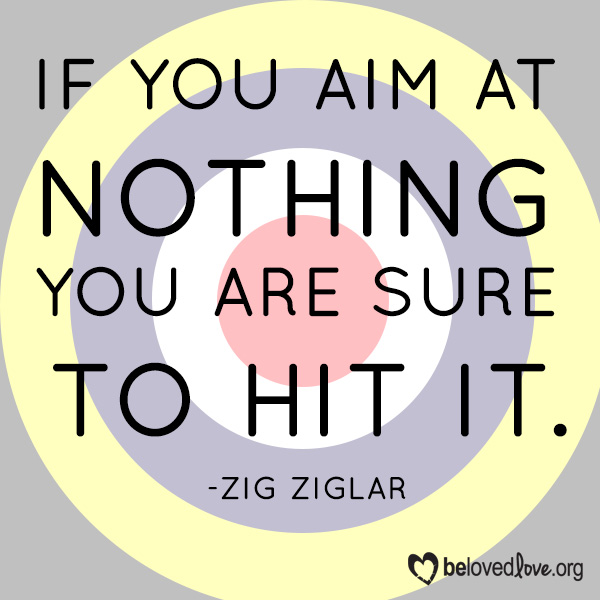
There is a saying by Zig Ziglar that says, “If you aim at nothing, you are sure to hit it.”   Another great saying is “A long journey begins with the first step.” if that is true, it makes sense that your first step of the rest of your life should be to figure out what you are aiming at in your life.

What are you aiming for in life? 

What are you aiming for in life?  What a great question to ask yourself as the New Year begins.  Putting it another way: What drives your decisions?  What are you focused on in life?

Are you even aiming at anything?

I think most of us are aiming at things, and usually these goals are based in core beliefs that we hold, and/or driven by needs we feel compelled to meet.  But our beliefs and  motives may not be obvious to us.  In fact, we can be immobile, and still be aiming at something. Perfectionists have this down to an artform:  we stop before we start, because we don’t BELIEVE there is any possibility of success. Here are a couple of examples:

  • You might believe that you are worthless, and have nothing to contribute. So you choose to not try.
  • Or you might believe that whatever you might attempt, it must be done “perfectly.” You might tell yourself:  I can’t do anything right so I might as well not start.

Floating

Is it possible to live life without focus or aim?  Maybe, but I doubt it. Some people truly seem to float through life. We all know people like this.  Floaters are professional victims.  Life “happens” to them.  It is as if they have given up on themselves.  They can be in a perpetual pity party, or just aimlessly floating along from one thing to another. Even though is seems like they don’t have any goals or focus, I believe they do, but it is rooted in a fixed false belief:  they don’t have any power over themselves or their circumstances, or they care more about doing nothing than making a difference. Their goal is to do the least amount possible. They think doing nothing (except maybe complaining) is the path of least resistance, but it truly is not. Passivity carries much more problems and headaches than purposeful action, and leads to much greater misery.   Floaters eventually float right over a waterfall, pitching them—and anyone with them– right out of the boat and into a torrent of churning water.

How to figure out what you are aiming at:  Take a look at the past.

We are all aiming at something, whether we realize it or not.  The best predictor of future behavior is past behavior, so if you want to know what is important to you–what you are currently aiming at in life–take a look at the past.  How you spent your most important assets–time and money—is a great indicator of what has been important to you, and what will likely guide future decisions.  This is relatively easy to do.

How to find out your main goal (s) for the past year:

1.  Just pull out your checkbook and your calendar for the past week/month/year, and ask yourself:  How did I spend my time? How did I spend my money?

  • Start with broad categories, and then estimate what percentage of your time and money was spent on each, or how many hours you spent on each.  (Don’t get all OC about it. We are just getting ballpark figures here.) Here is an example and some possible categories (Make these as broad or narrow as you like.):
  • Time:
    • Sleep  (8 hours/day, 56 hours/week, 240 hours per month)  30% of the time
    • Eating  (2 hours/day)  6% of the time
    • Internet/TV/video games
    • Exercise
    • Time with people (face to face or phone, not texting or internet)
    • Work
    • Chores
    • Travel
    • Prayer/worship/meditation
    • Reading the Bible
    • Reading
    • Hobbies/Interests
    • Childcare
    • Volunteering
  •  Money:
    • Bills
    • Housing
    • Groceries
    • Starbucks
    • Out to eat
    • Savings
    • Presents (friends and family)
    • Charity or similar giving
    • Schooling
    • Entertainment

2. Why?  A very powerful question  If you want to take this one step further, go to each of the categories (at least the most important ones) and ask yourself “Why?” three times:

For example:  30% of your time was spent sleeping.

  1. Why? Because my body needs sleep to function properly.
  2. Why? Because that is how my body is built.
  3. Why? I want to be healthy and for my body to function optimally.

Asking why repeatedly helps you to drill down to your more basic motivations, which can uncover true or false assumptions, or assumptions that need to be challenged.

  • Do I need to sleep?
  • What amount of sleep is optimal for me?

(Of course most of us would agree that 8 hours of sleep in our day is a pretty good use of our time.  But some areas might not be so clear.)

3. What has been your main goal?

Now look through your lists and your whys.   What common themes are there? If you could summarize your life, what would you say your main focus or goal has been?  Come up with 1-3 things.  Now you have a much better idea of what you have been aiming at (if anything) in the past year, and, therefore, where you are likely to be focused in the coming year.

Is this really where you want to go?

So now comes the kicker question:  Is this where you want to go?  Why or why not?

For example:  If you can see that your primary focus has been to get an education, ask yourself: Why are you doing this?  And why are you studying this? Is this your ultimate aim in life? If not, what is? What led you to this decision? Is it a direction you still feel you need to go? Why? It may lead you to other questions: How much money DO you need to make? What kind of career ARE you supposed to have? Does it fit the set of gifts/talents God has given you, or is it just a means to a financial end? What beliefs or thought processes are guiding these choices?

When you start asking these type of questions, you are well on the road to figuring out not only what has guided your past choices, but consciously [as opposed to passively] choosing if this is the right way for you to continue in your future.

Share with us: What have you discovered as you examine your goals this year?
Recent posts: A Note In Your Lunchbox, To Be, To-Do To Be
It’s Not Just About You

by Lydia Floren

A while back I wrote a blog It’s not about you or is it?  Before we can turn our attention to loving others, we must first accept who we are, recognize our needs, and choose to allow God to meet our needs.

Two key parts of this process are:

  • Identifying faulty coping mechanisms or ways we have tried to meet these needs in the past.
  • Replacing these coping mechanisms with constructive habits that will make way for God to move in our lives and meet our needs.

Reminder:  We all have needs.

Everyone has a need for food, shelter, but we also have needs that are in some ways deeper, needs for love and affection, a sense of identity and value, and belonging.

Coping mechanisms

And we all have developed habits—or ways of coping—in order to meet those needs. With some of these habits, we rely on ourselves.  With others, we expect other people to meet our needs. Here are a few examples of coping mechanisms:

  • Grabbing what you can when you can:  attention, love, stuff.  Focusing on what you want, and not what god says you need. Calling wants needs.
  • Controlling things around you so that you can be comfortable and secure: our environment, relationships, and living by a rigid structure.
  • Denying that you have needs.
  • Escaping life by immersing yourself in TV, gaming, social media, alcohol or other means of escape.
  • Floating along, refusing to take responsibility for your life, your actions, or–even more telling—your inaction.
  • Expecting others to meet your needs. Relying on other people to make you happy.  Assuming that anyone and everyone else’s job is to make you happy.
  • Assuming that your own happiness, comfort, and success is more important than someone else’s’, or that their happiness is more important than yours.

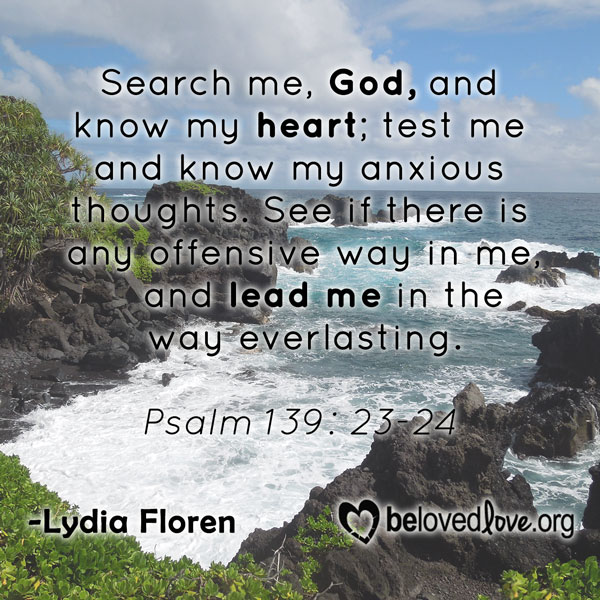
Replace these coping mechanisms.  Living a life guided by God is living a life increasingly free of the faulty habits we have so carefully cultivated. In Psalm 139 David prays:

Search me Oh God, and know my heart. Try me and know my anxious thoughts. And see if there be any hurtful way in me, and lead me in the everlasting way. Psalm 139: 23-24

Here are a few of God’s ways that can replace our coping mechanisms:

  • Giving.  Keep what you will use, and give the rest away.
  • Letting go. Learning to rely on God to meet your needs and not yourself. The secret of being content in every situation, whether you have much or little.
  • Accepting your needs, and the importance that they are met.
  • Facing life, including its hard parts, knowing that you are not alone:  God is with you and within you.
  • Owning your life.  Quit playing the victim and accept responsibility, and that your decisions, as well as your indecisions, have consequences.
  • Releasing expectations. Hope in God, not people.  God is the meeter of your needs, not other people.  Sometimes He uses people, sometimes He doesn’t. But He often meets your needs in ways you don’t expect.
  • Recognizing that you are important, and everyone else is, too.  Life isn’t a competition, it’s a collaboration.

Our needs are 100% met by Christ.  Because of Him, we don’t have to hide, or hang on to anything or any person.

There is enough. There is more than enough. Our cup overflows. 

 And my God shall supply all of your needs according to His riches in glory in Christ Jesus. Phil 4:19

Once we accept the truth of God’s provision, we can take our eyes off ourselves and give as God would have us give–live as God would have us live.

Share with us: What are you doing to overcome your unhealthy coping mechanisms? How are you making room to let God in?


sunray_blog2

Related posts: It’s not about you, or is it?, Be Still and Know That I Am God, Living Grace

To Be

todotobebelovedlovetitleby Lydia Floren

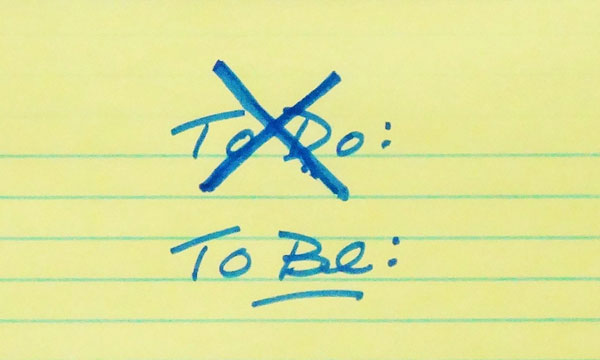
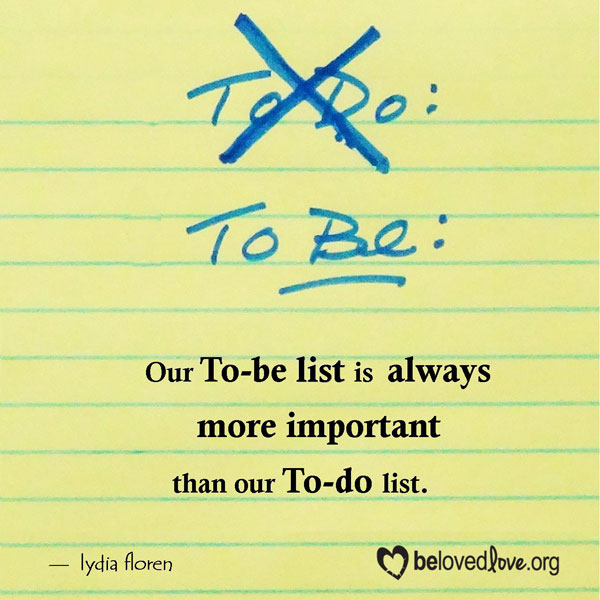
In my last post, I talked about TO-DO lists, and the importance of BE-ing restored every day.  That got me thinking:  What are some great things to have on a TO BE list?

TO BE:

Be Restored. (see last week’s post for more on this)

  • “He [The Lord] makes me lie down in green pastures. He leads me beside quiet waters.  He restores my soul.” Psalm 23:2-3
  • Restore to me the joy of Your salvation And sustain me with a willing spirit. Psalm 51:12
  • I have spoken to you, that my joy may be in you, and your joy may be filled John 15:11 

Be Cherished. You are fully known and completely loved. Not because of what you do, but because of who you are: a precious creation of God’s.

  • “I have loved you with an everlasting love; I have drawn you with loving-kindness.”   Jeremiah 31:3
  • You have enclosed me behind and before, and laid Your hand upon me. Psalm 139:5
  •  I have called you by name; you are mine. Isaiah 43:1

Be Forgiven. There is no reason at all to keep carrying around regret and guilt and shame.  Choose to receive God’s forgiveness, and forgive yourself.

  • All of us, like sheep, have strayed away. We have left God’s paths to follow our own. Yet the LORD laid on him the sins of us all.  Isaiah 53:6
  • He has removed our sins as far from us as the east is from the west. Psalm 103:12
  • Blessed are those whose transgressions are forgiven, whose sins are covered. Romans 4:7

Be Free.  Let go of worry, resentment, unforgiveness, expectations for yourself and others, old habits.

  • Now by “the Lord” is meant the Spirit; and where the Spirit of the Lord is, freedom is enjoyed.  2 Cor. 3:17
  •  For freedom did Christ set us free: stand fast therefore, and be not entangled again in a yoke of bondage. Galatians 5:1
  • Don’t judge, and you won’t be judged. Don’t condemn, and you won’t be condemned. Set free, and you will be set free. Luke 6:37
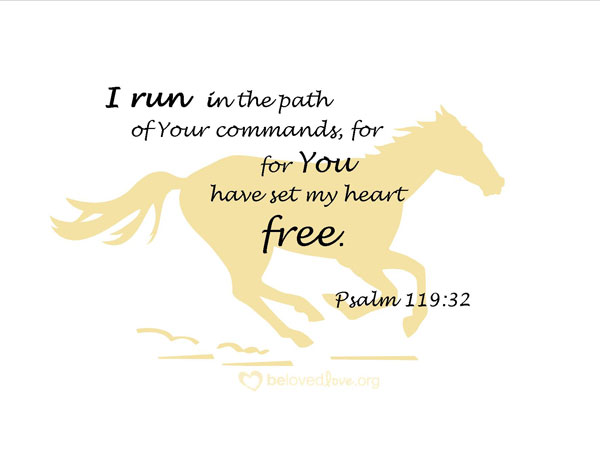
  • I run in the path of your commandments, for you have set my heart free. Psalm 119:32

Share with us: What’s on your TO Be list?

Blog

Related posts: To-Do, To Be, Oil of Joy, Joy = Love + Laughter, The Barnacles of Busy-ness

To-Do, To Be

todotobebelovedlovetitle
by Lydia Floren

I am a big list person, always have been. I have little scraps of “to-do’s” on sticky notes stuck around the kitchen, my office, in my purse, the car…I have learned a thing or two about myself in my years of list making.

  • One thing, I have learned, is that for me, the act of writing something down on a list helps me remember it, even if I never look at it again.
  • Another thing, I have discovered about myself, is that I am not a very good judge of time. (I know that shocks those of you that know me.) I tend to cram my to-do list with more tasks than I can reasonably accomplish, which means I am more likely to be frustrated and hurried as the day goes on.
  • A third thing, I have learned about myself, is that if I really want to remember to do stuff, I have to put the list somewhere obvious. My favorite location is the refrigerator, since I seem to love to go open the door every hour or so when I am home. (Why do I do that BTW? Do I think a magic fairy is going to deposit delicious calorie free food in there when I’m not looking?] If it is really, really, important that I remember something: I write a reminder on my hand. I learned from my kids.

I have also learned a few great habits in list making:

  • Have 3 to-do lists.
    • General overall list, so you don’t forget stuff. This might have sub-categories like shopping, online, work, home, meal prep, etc., it could be written, or on your computer or phone.
    • Weekly to-do list.
    • Daily to-do list.
  • Schedule tasks from your to-do lists’ into your calendar. Once a week, look at your calendar, and your overall tasks, and jot down things that must be accomplished in the coming week. As much as possible, set aside time in the week to accomplish these tasks, and actually write them in your calendar.
  • Limit your daily TO-DO list to 5 or 6 items. This little habit has a great impact. It forces you to narrow down what is most important to accomplish in your day, and reigns in the temptation to expect yourself to do more than can reasonably be accomplished. And that reduces stress, worry, hurry, and frustration, and increases a sense of accomplishment.

My daily to-do list always begins with this:

1. Be Restored

Be Restored: It is kind of ironic that my daily TO-DO list begins with something TO BE. As I choose to be quiet, to be available, to meditate on God’s word, and be attuned to what He is saying to me, I am connecting my heart and spirit with the one Person in the universe who knows me completely and loves me more than I can imagine. In this process, He restores my mind, emotions, spirit, and even my body. He forgives, He gives perspective, He reminds me that I am fearfully and wonderfully made, and that He is taking care of me. He encourages me to release the past, move forward, and to enjoy the day.

No, I haven’t (and likely won’t) give up my TO-DO lists, but I have learned this: the most important thing, I can DO in my day, is TO BE restored. I can really tell if I miss it.

The Lord is my shepherd, I shall not want. He makes me lie down in green pastures. He leads me beside quiet waters. He restores my soul. Psalm 23:1-3

Read my meditation on Psalm 23:1-3 or check out the Belovedlove Psalm 23 Bracelet.

Share with us: What tips do you have for list making? How do you keep things in perspective?

todotobesunrayblog

Related posts: The Barnacles of Busy-nessPushing the Reset Button Again and AgainA Note in Your Lunchbox: giving thanks in all things

Oil of Joy

oil-of-joy-title

by Lydia Floren

From Streams in the Desert, by L.B. Cowman:

“There is an old story of an elderly man who always carried a little can of oil with him everywhere he went. When he would go through a door that squeaked, he would squirt oil on the hinges. If he encountered a gate that was hard to open, he would oil the latch. And so he went through life, lubricating all the difficult places, making it easier for all those who came after him. People called the man eccentric, strange, and crazy, but he was steady on, often refilling his can of oil when it was nearly empty, and oiling all the difficult places he found.

“In this world, there are many lives that painfully creak and grate as they go about their daily work. Often it seems that nothing goes right with them and that they need lubricating with ‘the oil of joy’ (Psalm 45:7), gentleness, or thoughtfulness.

“Do you carry your own can of oil with you? … A pleasant word is a bright ray of sunshine on a saddened heart. Therefore give others the sunshine and tell Jesus the rest.”.

Joy

Every day we have opportunities to lighten another’s load by sharing a word of encouragement, a laugh, or a simple act of kindness.  Ask God to help you be aware of opportunities to bless someone today. Be on the lookout for ways to soothe someone’s heart with a little “oil of joy.”

Oil of Joy


Whether you happen to be on the giving or receiving end of such a blessing, we would love to hear from you! Please share with us!

Related Posts: Choosing Joy, Kindness Is…, The Kindness of God

Be Still and Know that I am God, by Lydia Floren

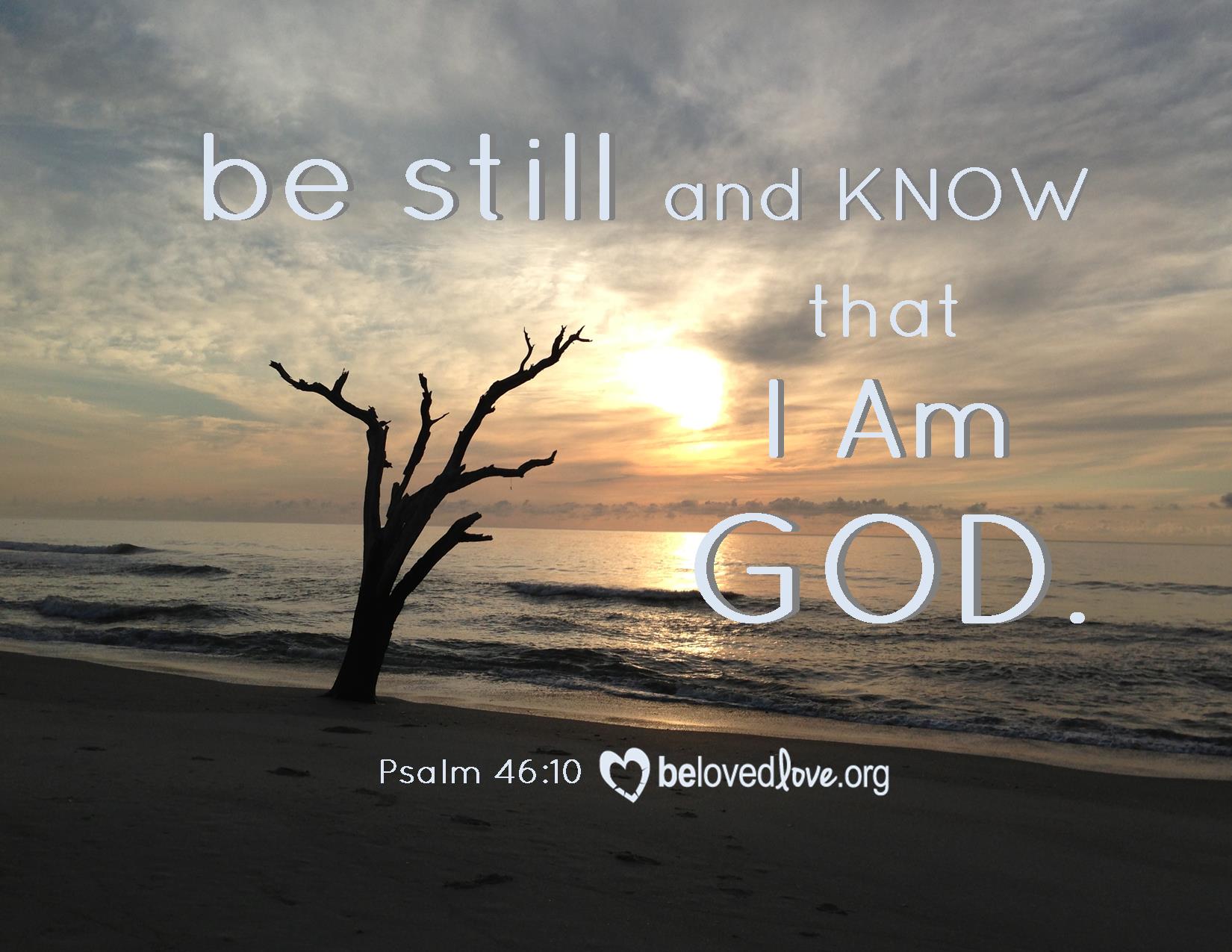
tree on shore with "be still and Know that I am God." written on it.

Be still and know that I am God.  Psalm 46:10

In the swirl and stress of the holidays, or just daily living, God often uses these 8 words to restore my soul.

“Be still and know that I am God.”

The simple acts of being and knowing, free us from the Twilight Zone of Anxiety, the Abyss of Never Enough.

“Be still and know that I am God.”

Be.

  • Just be.
  • Be aware of being alive. Appreciate that you have a beating heart, and air to breathe.
  • Settle into the truth that
    • You are fearfully and wonderfully made.
    • You are wanted. Treasured. Valued. Loved.
    • You are known and you are loved.

Be still.

  • Just stop. Rest. Take a breath. Or two. Be still.
  • Be still on the inside, as well as the outside.
  • Release all those thoughts swirling around in your head.
  • Take your mind off your responsibilities, your concerns, those things in your head that are nagging you.
  • Let go right now, and just be still.

 And know.

  • Let truth sink in.
  • Be aware of what is real, and what is not.
  • What is beyond seeing and understanding—and is in the realm of just knowing.

Know that I

  • Know the Person who made you,
  • Who knows you better than you know yourself.
  • Who loves you with an everlasting love, which is in no way dependent on what you do or don’t do.
  • Who lives within you.
  • Who has your back.
  • Who has shown, and will show you how to live.
  • Who will never steer you wrong.
  • Who goes after you when you stray—deliberately or unintentionally–and brings you back to the path of life and joy.
  • Who restores your soul, leads you into the light and away from the darkness.
  • Who will never leave you or reject you.
  • Who keeps you safe—protects your identity, value, belonging and calling—for all eternity.

 Know that I am God.

Know that this person–your heavenly father, your friend, your one and only guide in life, your creator—is God.

He is God.

He is

  • 100% good.
  • The most powerful being in the universe.
  • Wise
  • Trustworthy
  • Present
  • Compassionate
  • Understanding
  • Forgiving
  • Non condemning
  • Full of life and joy
  • Available
  • Ready to show you a better way to live
  • Committed to walking with you on that way.

“Be Still and Know that I AM GOD.”  Psalm 46:10

How has this truth changed your life?  Please share with us!

“Come to me, all you who are weary and burdened, and I will give you rest. Take my yoke upon you and learn from me, for I am gentle and humble in heart, and you will find rest for your souls. For my yoke is easy and my burden is light.”  Matthew 11:28-30

Escaping the Twilight Zone of Anxiety

Escaping the Twilight Zone of Anxietyby Lydia  Floren

In the holiday season, it is easy to get stressed.  Anxiety can slip up on you–or just slam you– but it always keeps you from enjoying life.  When we are anxious, we are fretful, not fruitful. We frown. We are easily annoyed. With all the activity and stress this time of year, it’s doubly important to recognize the signs that you may be entering the Twilight Zone of Anxiety.

 It starts with The Coulds.

I think we all have a little ADD; it’s hard not to get distracted, given the world we live in.  And any tendency our minds might have to wander, will kick into overdrive at the holidays.  We think about The Coulds.

There are so many things we COULD do.  We COULD entertain like Southern Living, decorate our homes like Architectural Digest, create gifts like Martha Stewart, dress like Vogue, bake cookies like Good Housekeeping.   We COULD attend the office party, the theatre production, the carol sing, the sleigh ride.   We COULD do all the things we didn’t do last year, that we promised ourselves we would do “next year, for sure.”  These “coulds” don’t order themselves into a neat list; they swirl around in our heads like a thick fog on a stormy night.

 Then come The Shoulds

Once The Coulds are established, The Shoulds creep in.  We SHOULD make this gift.  We SHOULD call so-and-so.  We SHOULD attend that event, buy this present, send that special card, call that person, volunteer for this cause. SHOULDS go very deep in our psychy.  Beneath the layer of things we SHOULD DO, is the even more corrosive layer of the things we SHOULD BE.  We SHOULD BE more loving, and patient, and thoughtful, and organized, and disciplined.  Between the Coulds and the Shoulds, everything in our heads becomes a muddled mess.

The Abyss of Never Enough

Eventually, we are forced to face the fact that we don’t have enoughof anything.  We don’t have enough time, or energy, or resources, or even compassion–to do what we think we SHOULD do, much less what we COULD do.  At first we might complain (whine) “if I just had more _______.”  Or we might try whipping those around us into action (usually less-than-enthusiastic family members), to help us get some of those Shoulds off our backs.   Finally we admit to ourselves: “There is never enough, and there is never going to be enough, of me to do all these Shoulds, no matter how hard I try.”

While this truth should be freeing, it is not. Not yet.  We aren’t finished sliding down into the pit, and we do this by saying to ourselves, “Somehow this is all my fault. I SHOULD have done this, I SHOULD have planned that.”  We get frustrated, depressed, and twice as stressed, beating ourselves up for every missed opportunity, every less-than-perfect outcome. When we reach the SHOULDS of REGRET, we have tumbled headlong into the Abyss of NEVER ENOUGH.  Here, we are truly at a standstill.

 Escaping the Twilight Zone of Anxiety

The way to freedom from all this anxiety and stress is 180 dgrees opposite the busy road we have been traveling.  Our freedom comes when we decide to quit focusing on ourselves, and our little corner of the universe, and turn our eyes to Jesus.   Jesus said “I am the Way, the Truth, and the Life.  No one comes to the Father but through me.”   When we spend our efforts connecting with the Maker of the Universe we get to know Truth—in Person.  That Person also said “You shall know the Truth, and the Truth shall make you free.”

I find when I choose to make time with God my top priority, everything changes.  The fog clears. I start to see the world more from His perspective. The things I was worried about don’t seem as important. And other things—things that weren’t even on my radar before—take precedence. The hymnist Helen H. Lemmel expressed  it this way:

Turn your eyes upon Jesus.                                                                                                                  Look full in His wonderful face,                                                                                                              and the things of earth will grow strangely dim,                                                                                in the light of His glory and grace.

The psalmist David said it another way:

…I waited patiently for the LORD; And He inclined to me and heard my cry. He brought me up out of the pit of destruction, out of the miry clay, And He set my feet upon a rock making my footsteps firm. He put a new song in my mouth, a song of praise to our God… Isaiah 40:1-3

What ways has God freed you?  We’d love to hear from you!

For more reflections about the holidays, check out  Perfect Holidays, Shine your Heart, or   Crunch Time.

The Blessings of Giving Thanks

blessings of giving thanks titleby Lydia Floren

What one habit has most transformed your life?  For me the answer would be                           the practice of thanks-giving..  Here are a few of the blessings of giving thanks that I have experienced:

Attitude. I see even a little blessing in life as a bonus, not a right, when I appreciate that my life—and everything in it—is a gift from God.

Contentment.  I am free to enjoy each day–even if things are difficult–when I give thanks that God is working all things to good.

Trust.  It is easier to trust God’s direction, especially when the future seems uncertain, as I give thanks for God’s love and goodness.

Fearless following. I can boldly follow God’s lead–the best i know it–as I give thanks for God’s commitment to safely guide me. I know that He will make any mid-course corrections if I misunderstand or just wander away for awhile.

Self-concept. I am at peace with who I am when I give thanks for my life–the unique blend of attributes that makes me “me”.   It settles me.  I have nothing to prove. I am valuable, and valued by the most amazing being in the universe, the person that made me.

Encouragement.  I am en-couraged—given courage to be myself, when I appreciate my identity and value.   And I can then en-courage others.

Hope.  I have hope to see beyond a hardship when I am giving thanks in the middle of it.  I can also more readily see benefits of those challenging situations.

Perspective.  Giving thanks for eternity reframes my perspective, and reminds me  what is really important.

Focus. Giving thanks for others takes my focus off myself.

Tolerance.  When I give thanks for the unique gifts of others, I more inclined to celebrate differences, instead of being annoyed by them.  I can appreciate that each person’s individuality makes life rich, just like one spice combined with another creates a wonderful flavor.

Freedom.  Giving thanks for Christ’s sacrifice allows me to leave the past behind, and to quit beating myself for being “imperfect.”  God completes me. In Him I am perfect.

Calling.  There is nothing like the deep soul-satisfying joy of God working through me to love another person in my own unique way.  Giving thanks to God for calling me to be loved, and then to love–Him, myself, and those I encounter–brings me joy.

Presence of God.  Giving thanks in all things brings me into the very presence of God.

The practice of giving thanks in all things has changed–and continues to change–my life.

How has giving thanks blessed you?  We’d love to hear from you!

God Showing Off: The Master at work

god-showing-off-title

by Lydia Floren

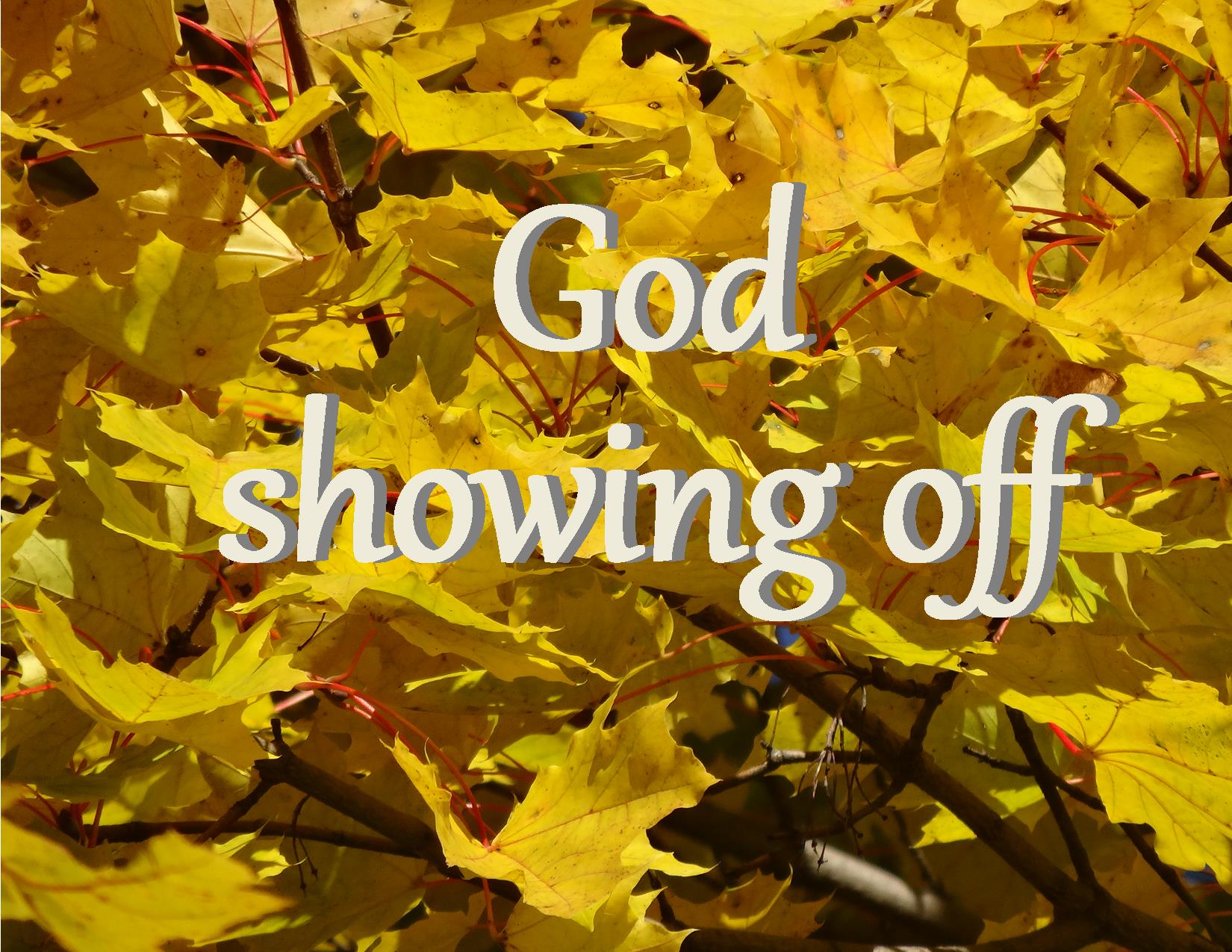
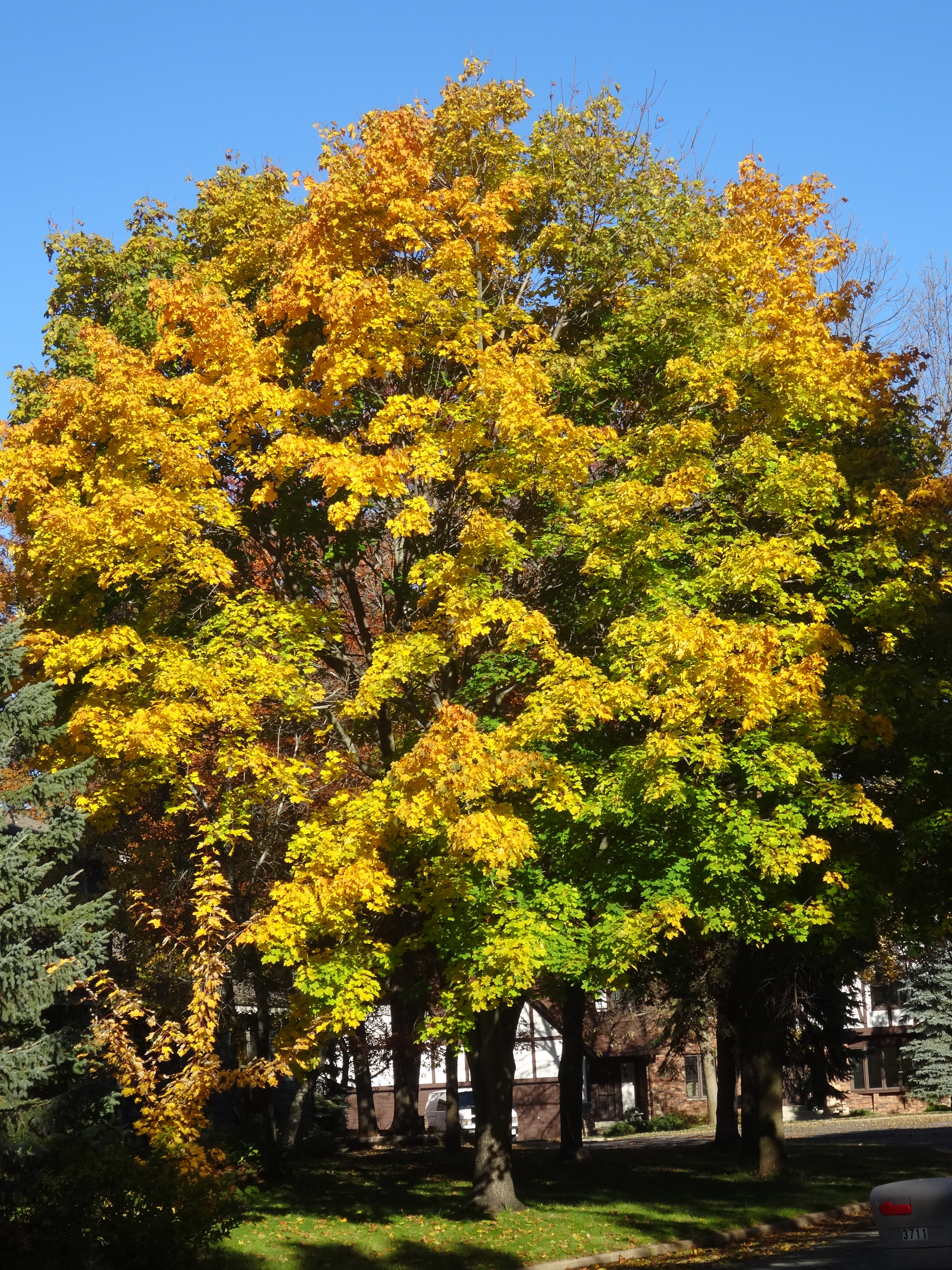
The fall colors have been spectacular this year in Eau Claire.

DSC01769 As i was wandering the neighborhood taking picture after picture I thought:

        God has really been showing off this year.

DSC01512 - CopyDSC01606 (2)Showing off?  No, not really.

Fall colors in Wisconsin—like spring flowers in South Carolina—are just napkin-doodles            for The Master Artist.

God showing off?    How ’bout

Angels singing in the air.

             God inhabiting a human body.

                   And a world transformed.

Now that there is some serious artwork.??????????????????????????????????????????????????????????????????????????????????How has He transformed you?  Please share!


It’s Not About You, Or Is It?

its-not-about blog titleby Lydia Floren

 It’s Not About You.   Or Is It?   

It’s not about you.  I have never understood that statement.  Think about it.  You are the only one living your life. You make your own choices.  You experience life with your unique thought processes and personality.   In reality, your life is–well–yours.

But it’s not JUST about you.

So what do people mean when they say “it’s not about you”?  I think they really mean that your life is not just about you.  It is about more than you.  Here’s what I mean:  You are not the only person in the universe. For example–and this is the most important by far, this universe is inhabited by God, your maker.  In fact, you–your life– is a creative expression of God.  You are His masterpiece.  In addition, there are other people like you inhabiting this world, people with life, wants, and needs just like you.   And, for good or ill, your choices impact your connection with your creator, and influence other people in your little corner of the world.

Here’s the problem: if you have not learned to accept and appreciate yourself,  YOU are all you can think about.  You focus on trying to get your needs met.  Conversely, when you are at peace with yourself,  you have the capacity to focus outward instead of inward, blessing others instead of expecting from them.

Everyone is needy–everyone has needs.  In order to move beyond yourself, you have to

1.  Face your needs and then                                                                                                                     2.  Choose to look first to God—not other people—to meet those needs.  

Our Needs:

We all recognize our needs for food, clothing, and shelter, but we often ignore important needs that go beyond the physical. Only when we acknowledge these needs, and they are truly met,  can we move past  ourselves. For example, we all need

  • Identity–a sense of who we are as a person, an understanding and appreciation of ourselves as a unique individual
  • Value–a belief–and solid reason for the belief–that we are valuable
  • Belonging–a place in the world where we feel safe, and at home–where everyone knows our name.
  • Calling/direction–a sense of purpose, and genuine hope that we can fulfill that purpose.
  • Safety–the deep knowing that you are protected: that nothing and no one can destroy you.

We try hard, mostly in subconscious ways, to meet these very essential needs, but come up empty most of the time–and for good reason:  it is impossible.  There is no way that we–or any other person on the planet–can meet these needs.  That doesn’t keep us from trying.  Many promising relationships wither under the heat of our unrealistic expectations: that someone else can, and should, meet our most basic needs.

God is the only person that can satisfy our hunger for identity, value, belonging, calling, and safety.  Quite frankly, God not only CAN fill this void in our lives, He has already given us the means to do so. But He always gives us the choice of whether or not to accept His provision.  How do we recognize God’s provision, and accept it?   A good place to start is to invite Him into your life, and cultivate the habit of giving thanks in all things.

Give thanks to God for:

  • Your identity: the combination of personality, temperament, history, giftedness, passions, and connections that makes you totally unique in the world.
  • Your value: as His precious child, someone He paid a very high price to adopt into His family. You are cherished and loved by the most amazing being in the universe. The Person that knows you best loves you most.
  • Your belonging: as a member His family, And your belonging in this moment in time, and in this place in the universe:  You are not here by accident. You belong where you are.
  • Your calling/direction:  to love God, yourself and others in your own unique way as you live your life.
  • Your safety:  nothing/no one can touch or change your identity, value, belonging and calling IN ANY WAY. These are safe, and protected by God.  As God’s child, your existence is safe for eternity.

Be thankful for you, the person you are and are becoming. 

Be thankful for God, who fills your deepest needs abundantly, beyond all that you can ask or imagine. 

 And my God will supply all your needs according to His riches in glory in Christ Jesus.                Philippians 4:19